
Pigmentation by Picofy | Park Avenue Dermatology
With precision laser clarity for sunspots, age spots, melasma, and uneven tone, Picofy for pigmentation offers exceptional results with minimal downtime.
Unwanted pigmentation, whether from years of sun exposure, hormonal changes, or aging, can be effectively and safely addressed with Picofy’s ultra-fast, picosecond laser technology. At Park Ave. Derm, our board-certified dermatologists customize every treatment to your specific skin concern and skin type.
Picofy Pigmentation Treatment – At a Glance
TARGETING PIGMENT AT THE SOURCE
Powered by InMode, the leader in energy-based aesthetic technology, Picofy for pigmentation concerns offers many benefits, including:
- 2–4 Sessions for most sunspots & skin rejuvenation
- 24–48h Typical recovery so you can resume your routine quickly
- All Fitzpatrick skin types, including deeper tones
- Progressive improvement as skin renews & clears
Why Picofy for Pigmentation?
TARGETING PIGMENT AT THE SOURCE
Pigmentation, whether from sun damage, aging, or hormonal changes, originates from excess melanin deposits in the skin. Picofy’s picosecond laser precisely targets those melanin clusters, shattering them into microscopic particles that your body naturally eliminates over the following weeks.
Unlike older lasers that rely primarily on heat, Picofy’s ultra-short pulses create a photomechanical effect, meaning more precise targeting with significantly less risk of heat damage, inflammation, or triggering new pigmentation in the surrounding skin.
Precision Targeting
Breaks down excess melanin without disrupting the surrounding healthy, normally pigmented skin.
Safe for Melasma
Less heat means less risk of triggering melasma flares – a key advantage over older thermal lasers.
Collagen Bonus
While clearing pigment, Picofy also stimulates collagen production for improved texture and firmness.
Lasting Results
Results are long-lasting with proper sun protection and a maintenance skincare regimen.

Conditions Treated
PIGMENTATION CONCERNS WE ADDRESS
Every form of unwanted pigmentation has a different cause — and requires a tailored treatment approach. Our dermatologists diagnose and treat the full spectrum of pigmentation concerns using Picofy’s versatile laser platform.
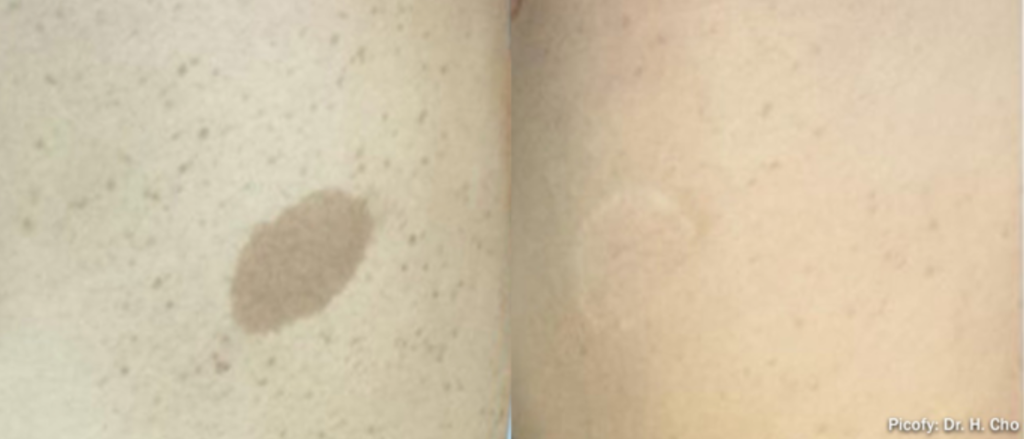
Sunspots, Solar Lentigines and Age Spots
- Flat, brown spots caused by cumulative UV exposure that typically appear on the face, chest, shoulders, and hands. Among the most responsive conditions to Picofy treatment.
- 2–3 Sessions
Melasma
- Hormonal hyperpigmentation presenting as symmetrical patches most commonly on the cheeks, upper lip, and forehead. Requires a careful, customized approach to avoid triggering flares.
- Customized Plan
Post-Inflammatory Hyperpigmentation
- Dark marks left behind after acne, injuries, or skin inflammation. PIH can be stubborn, and Picofy’s gentle approach helps fade these marks without aggravating the skin further.
- 3–5 Sessions
Benign Pigmented Lesions
- Seborrheic keratoses, café-au-lait spots, and other benign pigmented growths that affect skin clarity and uniformity can be effectively addressed with targeted laser energy.
- 1–2 Sessions
Overall Uneven Skin Tone
- Diffuse dullness, patchiness, and inconsistent tone, even without a single defined spot, respond well to Picofy’s full-face rejuvenation treatments for a more luminous, uniform complexion.
- 2–4 Sessions
A Special Note on Melasma
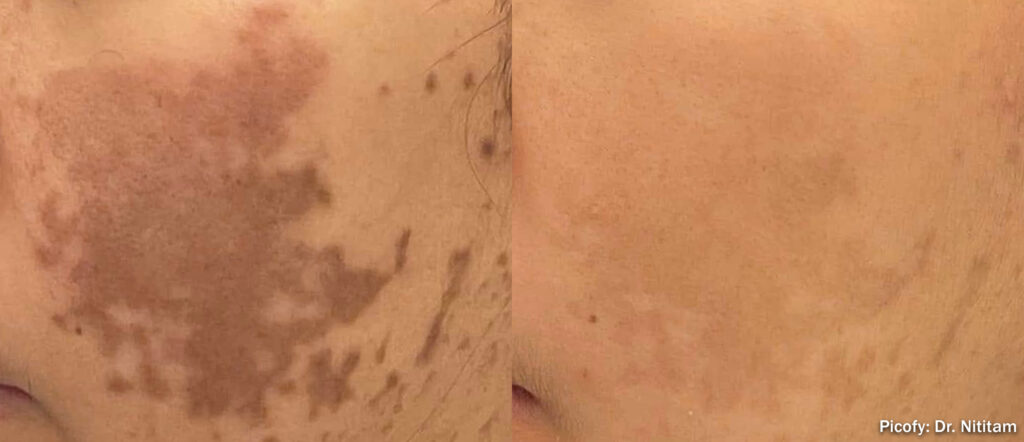
Melasma is one of the most challenging pigmentation conditions to treat because it can be triggered or worsened by heat, hormones, and sun exposure. Many traditional lasers that rely heavily on heat carry a real risk of making melasma worse. Picofy’s picosecond technology generates significantly less heat in the skin, making it one of the safer laser options for melasma-prone patients. However, melasma management is complex and typically requires a combination approach, including topical therapies, sun protection, and carefully scheduled laser sessions. Your Park Ave. Derm dermatologist will develop a comprehensive, personalized plan.
Inclusive Treatment
SAFE FOR EVERY SKIN TONE
Treating pigmentation in darker skin tones requires particular expertise and appropriate technology. With older thermal lasers, the risk of creating new or worsened hyperpigmentation is a genuine concern for patients with deeper skin tones. Picofy’s picosecond technology significantly reduces this risk, but physician oversight remains essential.
Realistic Expectations from Your Picofy Treatment
Our dermatologists believe in honest, informed conversations about what Picofy can and cannot achieve. Here’s what most patients experience:
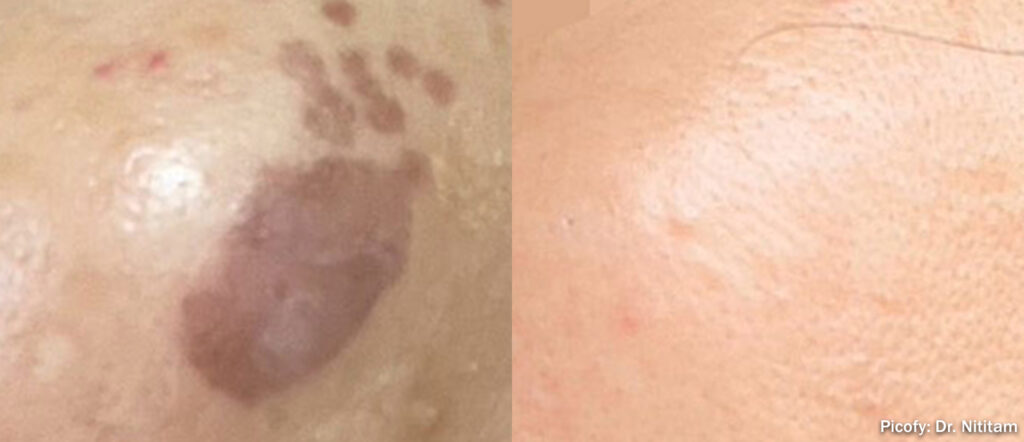
Before Treatment
- Visible sunspots, age spots, or uneven tone
- Hormonal melasma patches
- Post-acne dark marks (PIH)
- Dull, uneven complexion
- Flat benign pigmented lesions
After Treatment
- Significantly faded or cleared spots
- More even, uniform skin tone
- Improved skin clarity and luminosity
- Smoother texture with collagen boost
- Refreshed, healthier-looking complexion
When Will You See Results?
During Treatment
Quick, Comfortable Session
Sessions typically last 20–40 minutes. Numbing cream is applied beforehand. You may notice spots temporarily appear slightly darker or develop a white “frost.” Both are normal reactions.
Days 1–5
Darkening Before Fading
Treated pigmentation often temporarily darkens before it sheds. This is a normal part of the process. It indicates the laser has fragmented the pigment, and it is working its way to the surface.
Weeks 1–4
Pigment Sheds & Fades
The darkened spots naturally exfoliate away over 1–4 weeks, revealing clearer skin beneath. Tone becomes more even and overall clarity improves noticeably after the first session.
Months 1–6
Progressive Renewal
Collagen production continues improving skin texture and firmness. Additional sessions build on prior results, with the cumulative effect becoming increasingly visible over the full treatment course.
New York City Picofy Tattoo Removal FAQs
Yes, sunspots can be cleared very effectively with Picofy, and results are long-lasting. However, “permanent” depends on your behavior after treatment. If you continue to accumulate significant UV exposure without sun protection, new sunspots can and will develop over time.
With daily SPF 30+ and a protective skincare routine, the treated spots do not return, and results can be maintained for years, with occasional maintenance sessions as needed.
Picofy is one of the safer laser options for melasma, primarily because its ultra-short picosecond pulses generate significantly less heat in the skin than older nanosecond lasers. Heat can stimulate melanocytes and worsen melasma – an important consideration when choosing a treatment.
That said, melasma is a chronic condition with hormonal and UV components that laser alone cannot fully resolve.
At Park Ave. Derm, melasma treatment typically involves a combination approach that may include topical brightening agents, diligent sun protection, and carefully planned laser sessions. Your dermatologist will set honest, realistic expectations at your consultation.
This is completely normal and is actually a sign the treatment is working. When Picofy shatters the melanin clusters, the fragments initially rise toward the surface of the skin as part of the body’s natural healing and exfoliation process.
Over the following 1–2 weeks, this darkened area naturally flakes away, revealing clearer skin beneath. It is very important not to pick or scrub the area during this period. Let the skin shed naturally to avoid scarring or additional pigmentation.
It depends on the type and severity of your pigmentation:
- Sunspots / solar lentigines: 2–3 sessions for most patients
- Age spots and benign lesions: 1–3 sessions
- Post-inflammatory hyperpigmentation: 3–5 sessions
- Melasma: Customized plan — typically more sessions, combined with topical therapy
- Overall skin rejuvenation: 2–4 sessions for best results
Your Park Ave. Derm dermatologist will give you a specific, personalized estimate at your consultation.
Minimal downtime is one of Picofy’s most appreciated features. After treatment you may notice:
- Mild redness and slight warmth — resolves within a few hours
- Temporary darkening of treated spots over days 1–5
- Natural shedding of the darkened skin over 1–2 weeks
Most patients return to normal activities, including work and social events, the same day or the following morning. Concealer can typically be applied after 24 hours. Avoid direct sun exposure for at least 2 weeks after treatment and wear SPF 30+ daily.
Yes, with the right technology and physician expertise. Darker skin tones (Fitzpatrick Types IV–VI) carry a higher inherent risk of post-inflammatory hyperpigmentation (PIH) from laser treatments that generate significant heat. Picofy’s picosecond pulse technology dramatically reduces thermal buildup, making it one of the most appropriate laser options for deeper skin tones.
View Our Gallery
Schedule Your NYC Picofy Laser Consultation at Park Ave. Derm Today!
If you would like to schedule your Picofy laser pigmentation treatment, please fill out our contact form or call us at (212) 752-3692. We will do our very best to provide you with an appointment in a timely manner.