
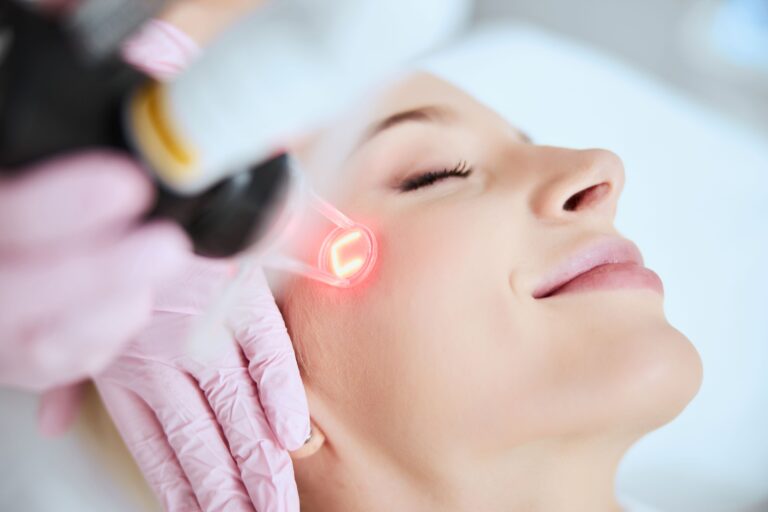
Acne is often treated as a short-term problem, but for many patients, breakouts persist for years despite appropriate skincare products, prescription medications, and lifestyle changes. At Park Ave. Derm, laser and light-based treatments are frequently incorporated into broader acne management plans, particularly for patients dealing with ongoing inflammation, excess oil production, or acne-related redness and scarring.
While laser treatments are not considered a permanent cure for acne, certain technologies can significantly reduce breakouts over time and help patients maintain clearer skin for longer periods.
How Can Laser Treatments Help Acne?
Laser and light-based treatments work differently than topical creams or oral medications. Instead of simply drying the skin or suppressing symptoms temporarily, these treatments target some of the underlying processes involved in acne development.
Depending on the device used, laser treatments may help:
- Reduce inflammation within active acne lesions
- Decrease acne-causing bacteria
- Lower excess oil production
- Improve redness left behind by breakouts
- Support collagen remodeling in acne-prone skin
Different technologies are selected depending on the type of acne, skin sensitivity, and overall treatment goals.
Which Laser Treatments Are Commonly Used for Acne?
Several laser and energy-based treatments may be used depending on the severity and type of acne being treated.
AviClear is one of the most targeted laser treatments available for active acne.
- Reduces oil production
- Targets sebaceous glands involved in acne formation
- Treats inflammatory acne
- Does not rely on oral medication
The treatment works by selectively targeting sebaceous glands while preserving surrounding skin. Many patients consider AviClear when they want an alternative to long-term medications or continue experiencing breakouts despite traditional treatment approaches.
Can Laser Treatments Help Prevent Future Breakouts?
In many patients, yes, particularly when excess oil production and inflammation are major contributors to acne.
Laser treatments can help create a less acne-prone environment within the skin, which may reduce both the frequency and severity of future breakouts. Results vary depending on several factors, including:
- Hormonal influences
- Genetics
- Skincare habits
- Severity of acne
- Consistency of maintenance treatment
Some patients experience substantial long-term improvement, while others still benefit from combining AviClear with prescription medications or ongoing skincare management.
Are Laser Treatments Better Than Acne Medication?
Not necessarily. They are simply different treatment tools.
Laser treatments are often considered when:
- Traditional acne treatments have not produced consistent improvement
- Patients want to avoid long-term oral medications
- Certain medications are poorly tolerated
- Acne is accompanied by redness, discoloration, or early scarring
In many cases, the most effective approach combines laser treatments with broader dermatologic acne care rather than replacing medical treatment entirely.
Who May Benefit from Laser Acne Treatments?
Laser and light-based acne treatments like AviClear may be helpful for patients who experience:
- Persistent inflammatory acne
- Frequent breakouts despite skincare products
- Excess oil production contributing to acne
- Acne-related redness or discoloration
- Early acne scarring or uneven texture
- Recurring acne that improves temporarily but continues to return
The dermatologists at Park Ave. Derm evaluate several factors before recommending treatment, including the type of acne present, overall skin condition, previous treatments, and long-term goals. In some cases, laser treatments are used on their own, while other patients benefit from combining them with prescription therapies or medical-grade skincare.
How Many Treatments Are Usually Needed?
The number of sessions depends on the specific treatment and the severity of the acne.
In general:
- 3 Aviclear treatments are required for acne clearance
- Improvement is gradual rather than immediate
- Maintenance treatments may still be recommended over time
Patients are typically advised that acne management is an ongoing process rather than a one-time solution.
Can Laser Treatments Help Acne Scarring Too?
Yes. Many laser treatments used for acne can also improve some of the residual skin changes left behind by breakouts.
Depending on the technology used, treatment may help improve:
- Uneven skin texture
- Post-inflammatory redness
- Certain superficial acne scars
- Overall skin quality and smoothness
Laser Treatment Options for Acne Scarring
For many patients, laser treatments become an added benefit of long-term acne treatment planning.
IPL is not typically used to treat active cystic acne directly, but it can help improve some of the lingering skin changes associated with breakouts.
- Reduces post-acne redness
- Improves discoloration left behind by inflammation
- Helps create a more even skin tone
This treatment is often used once active acne becomes more controlled.
RF Microneedling combines collagen stimulation with radiofrequency energy to improve acne-related skin changes.
- Improves acne scarring and uneven texture
- Supports collagen remodeling
- Helps refine acne-prone skin over time
Many patients pursue RF Microneedling after breakouts have stabilized but lingering texture concerns remain.
Fractional laser treatments, such as Picofy and eCO2, are commonly used for acne scars and skin resurfacing.
- Improve post-acne texture irregularities
- Stimulate collagen production
- Help soften certain acne scars
- Improve overall skin quality
Treatment intensity varies depending on the degree of scarring and desired downtime.
Clear + Brilliant is often used for milder skin texture concerns and early acne-related discoloration.
- Refreshes overall skin appearance
- Improves mild uneven texture
- Helps support smoother-looking skin
This treatment is generally lighter than more aggressive resurfacing lasers and may be appropriate for patients seeking gradual improvement with minimal downtime.
Is There Downtime After a Laser Treatment for Acne Scarring?
Downtime varies depending on the device and treatment intensity.
Some treatments involve little to no recovery, while others may cause temporary:
- Redness
- Dryness
- Mild swelling
- Flaking or sensitivity
Treatment plans are adjusted based on your skin type, schedule, and tolerance for downtime.
Learn More About Laser Acne Treatments in NYC at Park Ave. Derm
If you are frustrated by persistent acne and want to explore whether laser treatments may help reduce breakouts in the long-term, a consultation can help determine which options are most appropriate for your skin. Our dermatologists develop personalized acne treatment plans that may include lasers, light-based therapies, medical-grade skincare, and other dermatologic treatments depending on your needs.